Pregnancy Back Pain: How Chiropractic Care Can Support a Changing Body
Pregnancy is an exciting time, but it also brings significant physical changes. As your baby grows, your body continually adapts to new demands. For many expecting mothers, especially during the second and third trimesters, these changes can contribute to lower back pain, hip discomfort, pelvic tension, and stiffness through the mid-back.
While pregnancy-related aches and pains are common, understanding why they happen can help you find appropriate ways to stay comfortable and active.
One of the biggest changes during pregnancy is a gradual shift in your center of gravity. As the abdomen grows, your weight moves forward, which can change the position of your pelvis and increase the curve through your lower back. The muscles surrounding your spine, hips, and pelvis then have to work differently to support your changing body.
Hormonal changes also play a role. During pregnancy, the body produces relaxin, a hormone that helps loosen ligaments in preparation for childbirth. This increased mobility is a normal and necessary part of pregnancy, but it can also mean that the muscles surrounding certain joints have to work harder to provide stability.
Together, these changes may contribute to muscle fatigue, stiffness, or discomfort in the lower back, hips, pelvis, and surrounding areas.
Some expecting mothers also notice pain toward the front of the pelvis or groin. As the uterus grows and tissues throughout the pelvic region adapt, additional tension can develop. Because several structures can contribute to similar symptoms, determining where the discomfort is coming from is an important part of developing an appropriate treatment plan.
Chiropractic Care During Pregnancy
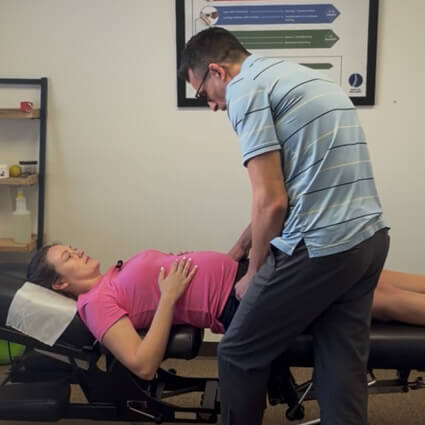
Chiropractic care during pregnancy can be modified to accommodate the changes happening throughout each trimester. Care should begin with a thorough history and examination to better understand your symptoms, rule out potential concerns, and determine whether conservative treatment is appropriate.
When appropriate, gentle chiropractic adjustments and manual therapy may be used to address areas of joint restriction, stiffness, and muscle tension. Specialized tables, pillows, and positioning can also be used to comfortably accommodate a growing belly.
Movement is another important part of supporting the body throughout pregnancy. Appropriate mobility and strengthening exercises can help the muscles surrounding the spine, hips, pelvis, and abdominal wall adapt to changing physical demands. The goal isn’t simply to address the area that hurts, but to consider how the body is functioning as a whole.
Pregnancy-related back and pelvic pain may be common, but that doesn’t mean you have to ignore it. An individualized approach that combines appropriate chiropractic care, movement, and ongoing assessment may help you better manage discomfort and continue doing the activities that are important to you.
If you’re experiencing lower back pain, hip discomfort, pelvic tension, or stiffness during pregnancy, consider having your symptoms evaluated to better understand what’s contributing to the problem and what options may be appropriate for you.